1.What is the Fire Alarm System?
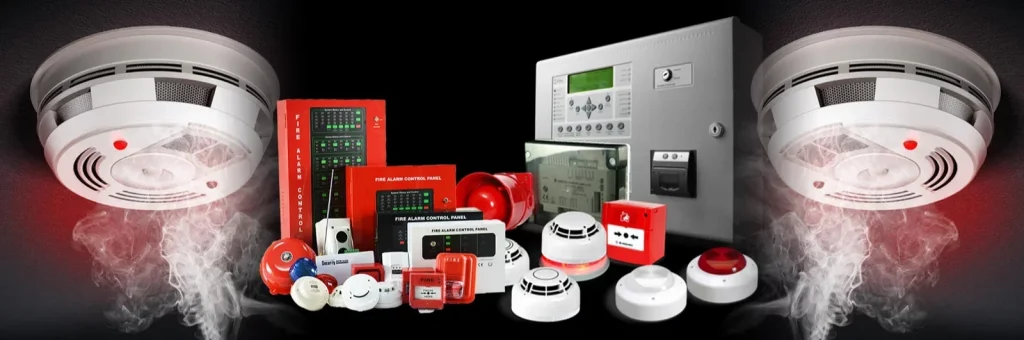
- A fire alarm system is a safety system designed to detect fires early and warn people so they can escape in time. It usually includes smoke detectors, heat detectors, manual call points, alarm sounders, and sometimes flashing lights.
How does a fire alarm system work?
Detection: Devices like smoke detectors or heat sensors notice signs of fire, such as smoke or a rise in temperature.
Manual Activation: If someone sees a fire before the system detects it, they can trigger the alarm by pressing a manual call point on the wall.
Control Panel: All the signals and detectors or manual call points go to a central control panel. This panel checks if the alert is real and activates the alarm system.
Warning: The system sets off sirens, bells, or flashing lights to warn people to evacuate the building. In some systems, a voice message may guide people to safety.
Notification to Emergency Services: Many systems are linked to fire departments or security services, so they are automatically notified when the alarm goes off.
Power Supply: Fire alarm systems have a backup power source, like a battery, so they still work during a power outage.
Types of Fire Alarm System:
1. Conventional Fire Alarm System
2. Addressable Fire Alarm Systemṁ
3. Wireless Fire Alarm System
4. Hybrid Fire Alarm System
1.Conventional Fire Alarm System:
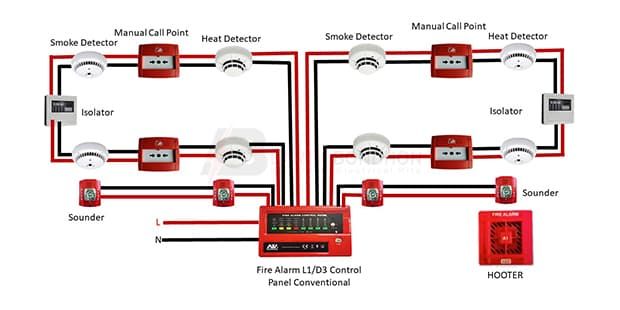
A conventional fire alarm system divides a building into zones like floors or sections, and all detectors in a zone are connected with wires to the control panel.
Each zone has a group of smoke detectors, heat sensors, and manual call points. When a device in a zone detects fire (like smoke or heat), it sends a signal to the control panel. The control panel shows which zone the alarm is from, but not the exact device. Alarm sounders and visual indicators (lights) alert people to evacuate.
A conventional Fire Alarm used in Small buildings like shops, small offices, apartments. That process is low cost and easy to install.
2. Addressable Fire Alarm System:
An addressable fire alarm system gives every device its own unique address or ID. This lets the control panel pinpoint the exact location of a triggered device.
Each smoke detector, heat sensor, and manual call point has a digital identifier ID. When a device detects danger, it sends its ID and signal to the control panel. Alarms, strobes, and voice messages alert people for evacuation.
It also monitors device health and alerts for maintenance and addressable fire alarms for us in large building areas in malls, hospitals, schools, and high-rise areas. Addressable fire alarm systems give a fast response and track device status and battery levels.
3.Wireless Fire Alarm System:
A Wireless Fire Alarm System uses radio signals instead of wires to connect all detectors and devices to the control panel. Devices (smoke detectors, heat sensors, manual call points) are battery-powered and use wireless radio signals to communicate. When fire is detected, the device sends a wireless signal to the control panel.
The panel triggers alarms, flashing lights, and messages as needed. Wireless fire alarms used for temporary setups are events, construction sites. easy installation and fast responses and no need for cable for flexible and clean design.
4.Hybrid Fire Alarm System:
A Hybrid Fire Alarm System uses both wired and wireless components in one system. Some parts, like smoke detectors or manual call points, are connected with cables, while others work wirelessly using radio signals. The main control panel can handle both types at the same time.
Fire Alarm System Devices:
1.Smoke Detectors:
Smoke detectors are a type of fire alarm detector designed to continuously monitor the air for any signs of smoke. Using either ionization or photoelectric sensing technology, they can detect the early stages of a fire and trigger an alarm as soon as smoke is detected. These detectors are essential for providing early warning, allowing people enough time to evacuate safely. Commonly installed in critical areas like offices, smoke detectors play a vital role in fire prevention and overall building safety.
2. Heat Detector:
Heat detectors are a kind of fire alarm that work by sensing changes in temperature. They go off when the heat in an area gets too high or rises very quickly in a short time. These detectors are especially useful in places like kitchens or factories, where smoke or steam is often present and could trigger false alarms in regular smoke detectors. Heat detectors help spot real fire risks without being set off by everyday smoke or steam.
3. Beam Detector:
Beam detectors are a type of fire alarm detector that use a projected light beam—usually infrared or laser—to detect smoke across wide, open areas. They work by sending a light beam from a transmitter to a receiver. When smoke crosses the beam’s path, it disrupts the signal, triggering an alarm.
These detectors are especially useful in large spaces with high ceilings, such as warehouses, factories, gymnasiums, and auditoriums, where traditional smoke detectors may not be practical or effective. Beam detectors provide reliable coverage over long distances, making them a smart choice for protecting big indoor areas.
4. Multi-Sensor Detector:
Multi-Sensor Detectors combine smoke, heat, and sometimes gas sensors to improve fire detection accuracy and reduce false alarms, making them ideal for offices, schools, and homes.
5. Strobe (Visual Alarm):
Strobes are visual fire alarms with flashing lights, helpful in noisy areas or for people with hearing impairment. They work with audible alarms to ensure everyone is alerted during a fire.
6. Hooter (Audible Alarm):
Hooters are loud audible alarms that alert people to a fire or emergency, ensuring the warning is heard even in large or noisy areas.
7. Zone Interface:
It’s useful for linking older, conventional zones to modern systems. Overall, it improves safety by giving clear and focused alerts.
8.Mini Monitor Module:
A Mini Monitor Module links simple fire devices to the main alarm system. It picks up signals when something like a manual call point is triggered. The module then sends this signal to the control panel. Its small size makes it easy to install in tight spots.
9.Relay Module:
A relay module allows the fire panel to control external devices during an alarm condition.The fire panel system includes a relay module that functions like a switch, activated by the panel to trigger critical automatic actions during an emergency. These actions may include shutting down air conditioning, unlocking emergency exits, or controlling ventilation systems. By linking the fire panel system to other building systems, the relay module enhances overall safety, ensuring faster and more automated emergency responses when every second counts.
10.Manual Call Point:
A Manual Call Point allows a person to manually trigger the fire alarm during an emergency. It is typically installed in clearly visible and easily accessible locations, such as corridors and near building exits.
When the glass is pressed or broken, it immediately sends a signal to the fire panel System, which then activates the alarm system. This enables a fast response, even before smoke or heat detectors are triggered. Manual Call Points are a straightforward yet vital component of any fire protection system.
11. External Power Supply:
An External Power Supply ensures the fire alarm system continues to operate if the main power fails. It provides backup power to essential components such as the fire alarm detector, alarm sounders, and control panels during emergencies
The fire panel system is equipped with a reliable power supply unit (PSU) that includes a built-in backup battery. This ensures continuous operation during power outages, maintaining the system’s reliability, especially in critical environments such as large buildings or areas with extensive fire protection equipment. The backup battery provides the necessary power to keep the system active, ensuring fire detection and alarm functions are maintained when needed most.
11. FRLS Cables:
FRLS cables are used in fire alarm systems to safely transmit signals during a fire. Designed to produce minimal smoke and toxic gases when exposed to high temperatures, they help keep escape routes clearer and safer for evacuation. These cables are durable, fire-resistant, and built to maintain performance in emergency conditions. They are especially important in areas where safety, visibility, and the reliable operation of equipment like the fire alarm detector are critical.
12. Monitor Module:
Monitor Modules connect fire alarm systems to external devices, enabling real-time monitoring and control of safety systems like sprinklers or gas valves. They enhance integration and protection, especially in complex or high-risk environments.
APPLICATIONS:
1. Residential Buildings:
Homes, apartments, and housing complexes for personal safety and early fire warning.
2. Commercial Spaces:
Offices, malls, and retail stores to protect employees, customers, and inventory.
3. Industrial Facilities:
Factories, warehouses, and manufacturing units where fire risks are high due to equipment and materials.
4.Public Infrastructure:
Airports, train stations, government buildings, and other public areas for crowd safety.
5.Institutional Buildings
Schools, colleges, and universities with tailored systems for quiet zones and large-scale alerts.
6.Healthcare Facilities
Hospitals and clinics need silent yet effective alerting mechanisms.
7.Data Centers & Server Rooms
Early fire detection is crucial to prevent data loss and system failure.
8. Government & Public Buildings
Airports, train stations, and administrative offices with integrated safety and control systems.
BENEFITS:
1.Early Detection & Rapid Response
Detect smoke, heat, or flames early to trigger quick alerts and prevent escalation.
2.Life Safety Protection
Audible and visual alarms ensure fast evacuation, reducing injury or fatality risks.
3.Advanced Communication
Voice evacuation systems and visual strobes provide clear instructions for safe evacuation.
4.Remote Monitoring & Control
Real-time alerts via mobile, email, or cloud dashboard; allows offsite monitoring and control.
5.Minimized False Alarms
Intelligent algorithms distinguish real threats from nuisances (e.g., cooking smoke).
6.Low Disruption Wireless Options
Ideal for heritage buildings or temporary sites where wiring is impractical.
7.Advanced Communication
Voice evacuation systems and visual strobes provide clear instructions for safe evacuation.
Unisol’s Expertise in Fire Alarm Systems:
At Unisol, we go beyond providing products—we deliver complete fire safety solutions tailored to your building’s needs. Our team begins with a thorough risk assessment and designs customized systems, whether it’s a conventional setup, an addressable fire alarm system panel, or a flexible hybrid solution. For buildings where wiring is challenging, we specialize in deploying advanced wireless fire detection systems that ensure reliable communication and quick installation without disruption. Every project is equipped with a high-performance fire alarm panel, designed for seamless integration with sprinklers, HVAC, and emergency lighting to create a unified safety infrastructure. From professional installation and commissioning to user training and regulatory compliance, Unisol ensures your fire alarm system functions flawlessly when it matters most. We also provide ongoing maintenance, panel upgrades, and remote monitoring support to keep your system code-compliant and future-ready. With Unisol, you’re not just choosing a fire alarm supplier—you’re choosing a trusted partner dedicated to protecting lives, assets, and business continuity through innovative, certified fire safety solutions.
Conclusion:
Fire alarm systems are vital for detecting fires early, ensuring safety through smoke, heat, and multi-sensor detectors. They trigger alarms, prompt evacuations, and integrate with other safety systems for quick response. Regular maintenance is key to reliability. These systems protect lives, property, and business continuity. Investing in one ensures compliance and peace of mind.



































 WhatsApp